 Supply disruption linked to the Iran conflict has tightened energy, fertilizer, and shipping availability across key trade routes. These changes are beginning to affect delivery reliability, production planning, and pricing decisions in industries that depend on continuous material flow.
Packaging and Manufacturing Supply Chains Are Entering a Higher-Cost Phase
Supply disruption linked to the Iran conflict has moved beyond energy markets and into the daily operations of manufacturing and packaging supply chains. Shipping reliability has declined, insurance costs have increased, and delivery schedules have become less predictable. These changes are beginning to affect production planning and procurement timing across industries that depend on continuous material flow.
The shift is driven by several factors:
- Shipping routes have become less predictable;
- War-risk insurance premiums have increased;
- The availability of key feedstocks derived from oil and gas has tightened.
These changes are affecting not only raw material producers but also the converters, packagers, and manufacturers that depend on them. Plastics and aluminum packaging are already experiencing early disruption effects as fuel and material costs rise and logistics reliability declines.
Materials that previously moved predictably are now arriving later, costing more, or requiring alternative sourcing. That shift directly affects inventory planning and production stability.
The Inputs at the Center of Packaging and Manufacturing Risk
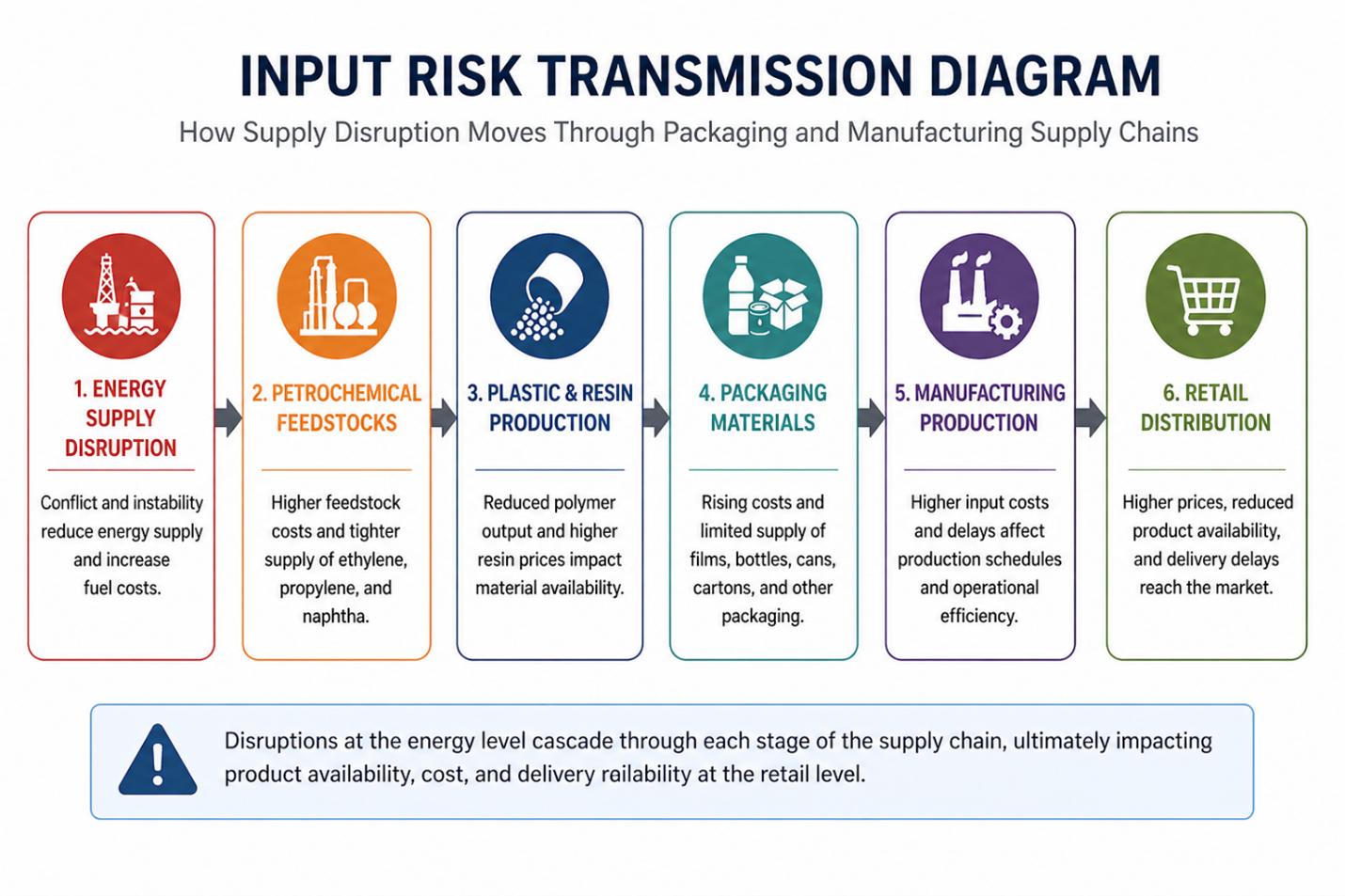
Packaging and manufacturing supply chains depend on a small group of upstream inputs that determine whether production continues smoothly. When these inputs tighten simultaneously, operational risk spreads quickly across sectors.
Energy and Transport Inputs
Diesel and marine fuel determine whether materials move between suppliers, factories, and distribution centers. When vessel availability declines or fuel costs rise, delivery reliability typically changes before production output does. Manufacturers may still have sufficient inventory, but replenishment cycles become longer and less predictable.
The Strait of Hormuz remains one of the world’s most critical transport corridors for energy and petrochemical shipments. Around 20% of global petroleum liquids consumption moves through this corridor, meaning even partial disruption immediately affects freight capacity and delivery timing because alternative routes require significantly longer transit distances.
Operational pressure usually appears first in logistics performance. Procurement teams often observe:
- longer delivery times;
- increased freight charges;
- reduced shipment frequency;
- tighter supplier allocation.
These signals indicate transport constraints rather than production failure.
Petrochemical Feedstocks
Most plastics and packaging materials depend on petrochemical feedstocks derived from oil and natural gas. Ethylene and propylene form the base materials used to produce plastic packaging, industrial films, and molded components. When feedstock supply tightens, polymer output declines and procurement costs rise.
Disruptions to petrochemical supply chains have already reduced output of key materials, tightening global availability and pushing prices upward. In some markets:
- Polymer prices have increased by 24-75% in the first weeks of the conflict.
- Naphtha feedstock costs have surged by nearly 74%.
Feedstock shortages can therefore reduce polymer production even when factories remain operational. The result is gradual tightening in material availability rather than an immediate shutdown.
Packaging Materials
Packaging materials themselves play a central role in distribution. Products cannot move to market without containers, films, cartons, and protective materials. Plastic packaging, containerboard, and aluminum packaging are particularly sensitive to changes in energy costs and transport conditions.
Shortages of plastic resins and glass bottles are already affecting production of consumer goods and pharmaceuticals, particularly in sectors that depend on continuous packaging supply.
Industrial Materials
Industrial materials such as aluminum, steel, and specialty chemicals further reinforce the system. These inputs support packaging lines, processing equipment, and logistics infrastructure.
Aluminum production is particularly sensitive to energy costs because electricity typically represents 30–40% of total production cost, meaning supply conditions can change quickly when energy prices rise.
The Middle East is one of the world’s largest petrochemical production regions, supplying major volumes of polymers and feedstocks to global manufacturing markets. Disruption in this region can therefore quickly affect supply balances worldwide.
When supply conditions tighten, the effects typically emerge through slower deliveries and higher procurement costs rather than sudden production stoppages.
Why Packaging and Manufacturing Costs Are Rising Faster Than Expected
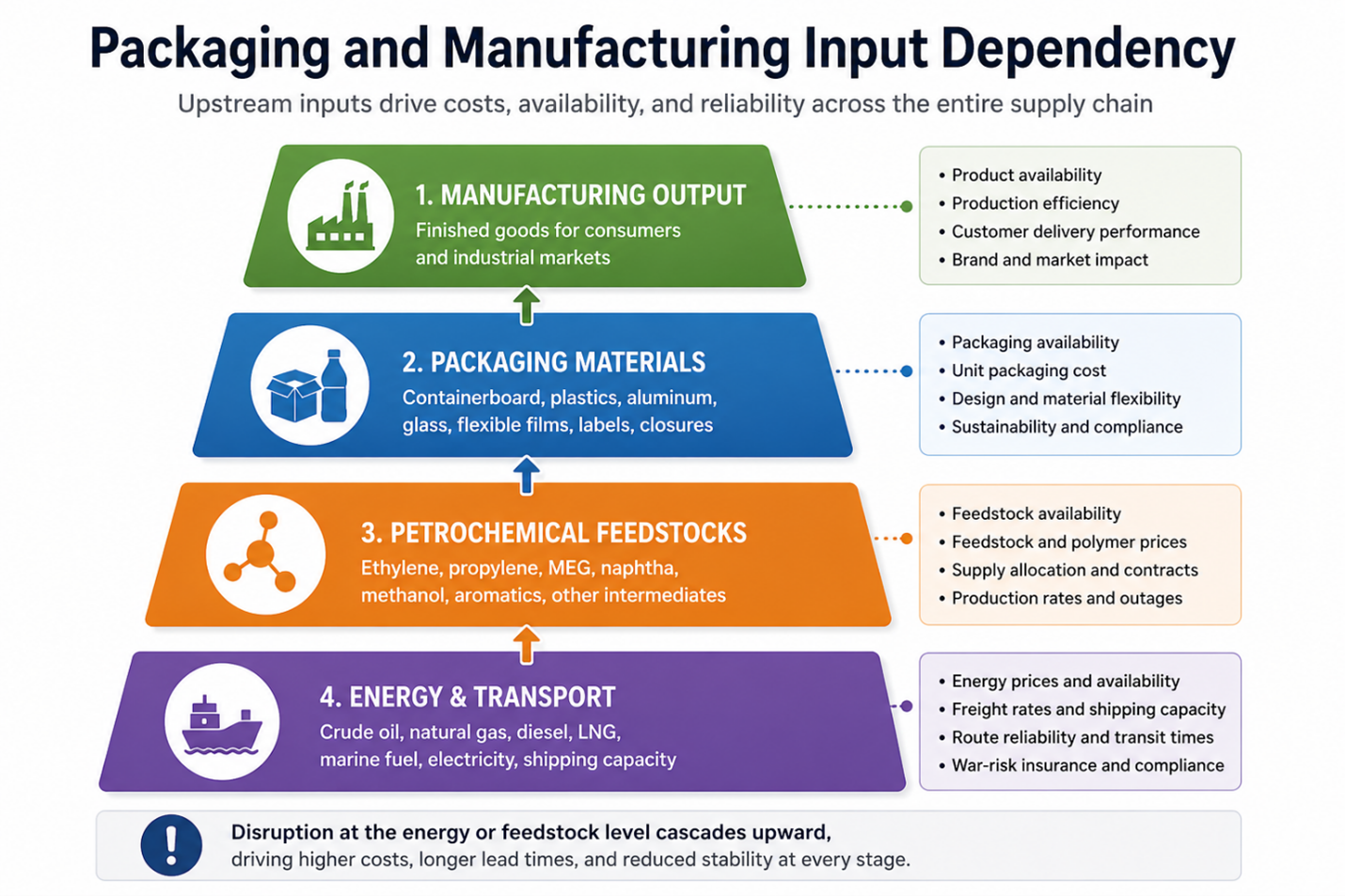
Input costs rarely increase in isolation. Instead, they move through supply chains in stages, with each stage amplifying the effect of the previous one. Understanding this transmission process helps explain why packaging and manufacturing costs can rise quickly during periods of disruption.
Energy costs typically move first. Higher fuel prices increase the cost of transport and industrial production. These increases then affect the price of petrochemical feedstocks used to produce plastics and packaging materials.
A typical cost transmission sequence looks like this:
- Energy prices increase.
- Feedstock costs rise.
- Polymer production slows.
- Packaging prices increase.
- Finished goods costs rise.
This cascading effect explains why cost pressure often appears gradually rather than suddenly. Companies that track early changes in upstream inputs are better prepared to manage downstream impacts.
The Signals That Indicate Input Risk Is Escalating
Supply pressure rarely begins with shortages. Instead, it emerges through a series of early signals that indicate tightening conditions across the supply chain. These signals often appear weeks before disruption becomes visible in production or retail markets.
The most reliable indicators typically include:
- persistent delivery delays;
- rising freight or insurance costs;
- reduced polymer or packaging production;
- supplier lead-time extensions;
- export restrictions on materials;
- rapid increases in energy prices.
These signals reflect the early stages of supply tightening rather than final shortages. Organizations that monitor them consistently can respond before disruption becomes operational.
Research on supply chain visibility shows that decision delays often occur because companies recognize cost changes too late rather than because they lack inventory.
What Procurement and Operations Teams Should Do When Input Risk Increases
When input risk begins to rise, the most effective response is measured adjustment rather than rapid reaction. Procurement and operations teams that respond gradually can maintain production stability while preserving flexibility.
The most effective actions typically involve:
- reviewing supplier exposure across regions
- adjusting inventory coverage for critical materials
- identifying alternative sourcing options
- monitoring freight and feedstock cost trends
These actions are risk-management adjustments designed to preserve operational continuity. Companies that adopt structured monitoring processes often avoid sudden purchasing decisions and reduce exposure to price volatility.
Why Packaging and Manufacturing Risk Requires Continuous Monitoring
Supply disruption in packaging and manufacturing is now affecting routine operations. It has become a recurring condition shaped by shifting trade routes, fluctuating energy costs, and changing supplier capacity.
The Strait of Hormuz handles a significant share of global oil and petrochemical shipments, making it one of the most critical transport corridors for packaging and manufacturing inputs. Even partial disruption in this route reduces available shipping capacity and increases transport costs.
Companies that rely on periodic market reviews may find themselves reacting to disruption rather than managing it. Continuous monitoring allows procurement and operations teams to recognize patterns early and adapt gradually.
Where Companies Can Monitor Packaging and Manufacturing Input Risk
Global Packaging Materials: Iran War Impact Brief provides structured visibility into changes across packaging and manufacturing supply chains. It tracks material availability, freight conditions, and price movement across the packaging and manufacturing industry, allowing you to identify risk before it disrupts production.
The report is prepared using the latest available market data and delivered within 48 hours of order confirmation. The objective is to support timely decisions in environments where supply conditions can change quickly and unpredictably.
About the Author
Petar Reshovski is the General Manager of Williams & Marshall Strategy (WMStrategy), a full-service market research company. He has decades of experience delivering market intelligence across a wide range of industries, including market sizing, competitive landscape analysis, feasibility assessments, and commercial due diligence. His work focuses on supporting strategic planning decisions in complex and rapidly changing markets.